Starting your own business is challenging, as it requires funds. Despite initial investment, you might run out of money. Cash is fuel for business. No business can survive without a healthy cash flow. There are hard times when you actually struggle with managing cash for your business. Here comes the role of a loan.
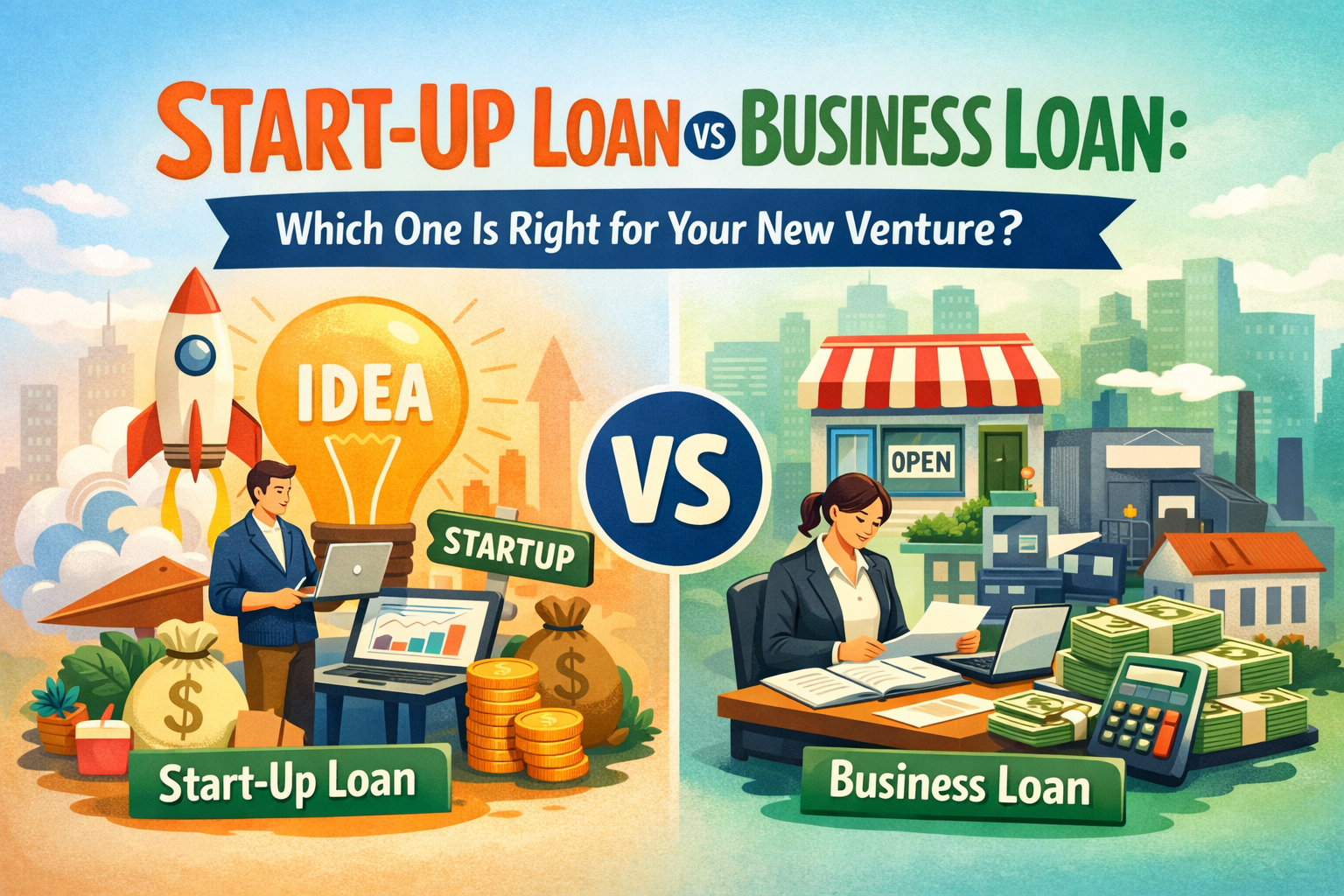
There are various types of financing options, which can be confusing. Most of the entrepreneurs feel bewildered about the options available to them. For instance, whether they should consider a start-up loan or a business loan. If you are starting a new venture, both options could be suitable, but they are different.
Basic understanding of business loans and start-up loans
First off, you must enlighten yourself by knowing the fundamental difference between the two types of loans. Business loans are appealing to companies of all scales in that they bring flexibility. A fixed sum of money is paid down, ensuring cash retention. Suitable for all types of needs, business loans can be employed to fund working capital reserves and purchase an asset, for instance, a new office space.
- Business loans could be secured and unsecured, depending on the loan amount.
- They are generally aimed at established companies with at least two years of experience and beyond the breakeven point.
Start-up loans, on the other hand, are unsecured loans aimed at assisting people with launching a new venture. They are not subject to your house or any business assets.
Start-up loans or business loans – which is better?
There is no straightforward method to choose between the two types of loans, as it largely hinges on your business needs.
- How much funding can you access?
Start-up loans could enable you to borrow up to £20,000, while business loans could go up to more than £100,000. If your start-up has strong financial backing, you can borrow even more than £20,000. Start-up loans could be applied for by each director, provided the total number of directors is not more than four, adding combined funds up to £100,000.
The minimum amount for a start-up loan is as little as £500 and £5,000 for business loans. Approbation is the result of an affordability check, so it is quite obvious that you could be lent less than you requested, with a number of factors playing an essential role, such as:
- Profitability
- Total time spent in the business
- Business or personal credit score
- Existing business debts
- Projected profits
In order to be perceived as less risky, work on your business plan. If you need a small amount of money, there are lenders who provide business loans with instant approval.
- How easy are both loans to qualify for?
The next thing on the criteria is accessibility. Business loans are provided by various mainstream lending institutions, including banks, direct lenders, and peer-to-peer platforms. Business loans involve a large lending amount, and henceforth, the approval process is lengthy and demanding. The lending decision relies on multiple factors, such as:
- Your creditworthiness
- Overall financial condition
- Business sales and profitability status
- Personal credit score (some lenders take it into account, too, especially when you have to give a personal guarantee)
Start-up loans are not subject to fewer challenges. Since your business does not have a long trading history, your business’s potential to be committed to payments will always be in question. A less-than-a-year trading history is not substantial enough for you to demonstrate your ability to adhere to payments.
However, with an effective business plan that highlights projected profits, you can improve your chances of being accepted easily. You will need a cash flow forecast rather than a statement of account and an income statement to be eligible to have it signed off on.
Start-up loans do not require a guarantor if you need a small amount of money. Lenders providing start-up business loans with no guarantor do not lend more than £10,000.
- What would be the cost of both loans?
The total cost of the loan plays a paramount role in decision-making. However, it is influenced by two essential factors: your creditworthiness and business profitability.
Of course, if a lender finds your business less risky, they will be flexible with interest rates and terms and conditions, which means attractive interest rates will be charged. Interest rates could be fixed or variable.
If your credit rating is not so perfect and your business’s current situation raises concerns about repayment capacity, they will charge high interest rates.
However, if you choose fixed rates, the total cost of the debt will be different from that of variable rates. It is advisable that you carefully plan your budget, especially if approval is subject to projected profits.
While comparing the cost, take into account the fees and associated charges as well. Fees that you would be liable to pay, along with interest, are:
- Upfront fees, also called processing fees (this is a one-off cost)
- Monthly fees in some cases
- Early repayment charges if the loan is settled before the scheduled timeframe.
- Late payment charges are imposed if the payment is missed or defaulted.
- How long do they last?
Start-up loans last between one and five years, while business loans last between five and 10 years. The repayment duration could be even higher.
To conclude
Start-up loans and business loans are both used for funding business expenses, but they are reliant on your needs, goals and current profitability statement. Consult a financial advisor if you are vacillating between available options.

Harry Kane is a financial writer and author who has covered wide topics related to business loans and finance for the last decade. He has been working as the Chief Contributor in finding out deals on various business finance products covered by Thebusinessfunds, a reputed business loan broker firm in the UK. The primary work of Harry is to analyse the loan requirements of various businesses according to their circumstances and affordability. He directly communicates with the loan aspirants and guides them to get the right loan matching their needs. He has a vast experience in finance writing, working with many major business firms in the UK. At Thebusinessfunds, Harry also used to write well-researched blogs covering the financial problems of business loan aspirants and providing relevant solutions. He is a postgraduate with MSc. in Banking and Finance.