Small businesses often require additional capital for expansion, equipment purchase, and maintaining cash flow. Financing from banks could be challenging as they require you to meet certain conditions, such as:
- You must have been trading for at least a year.
- Your credit score should not be subpar.
- There must be a consistent growth in profits.
Therefore, many entrepreneurs rely on direct lenders. Small business loans in the UK from direct lenders are easier to qualify for than from banks, as they do not use traditional approval norms.
What is a small business loan?
A small business loan is a financing option that enables you to borrow a lump sum of money to invest in your business, which you pay down over a period of months, depending on the loan amount and your repayment capacity.
Small business loan is a broader term. It includes various types of business loans, such as:
It provides you with access to a pool of funds which you can withdraw as and when you need. You will pay interest only on the withdrawn amount. Unlike credit cards, you do not have to pay back the full balance. You can make partial payments of what you borrowed. The amount you pay back becomes eligible for borrowing again. A line of credit is the best option when you need money to finance working capital.
When small business loans are sought after by a start-up, they are called start-up loans. Although start-ups can qualify for business loans, the approval criteria for start-ups differ from those for established businesses.
As a start-up, you will need a business plan to ensure that your project will be a success. You must have hit the breakeven point, though you have not been trading for a year.
Equipment financing is also a type of small business loan. They are used to finance the cost of equipment. The equipment itself serves the purpose of collateral, so you do not have to put in additional security.
Technically, it is not called a loan as you borrow an advance on your future card sales, but you are required to pay factor fees, a fixed multiplier that calculates the total cost of funding. In order to qualify for a merchant cash advance, you must have a high volume of card sales. A merchant cash advance is the best option for fixing temporary cash flow problems.
Invoice financing is also a type of small business loan. This enables you to borrow up to 85% of your unpaid invoices to fund the gap in working capital. The remaining amount is paid back to you after completing the collection process. Invoice financing is suitable for businesses which sell goods and services on credit and issue invoices to their customers.
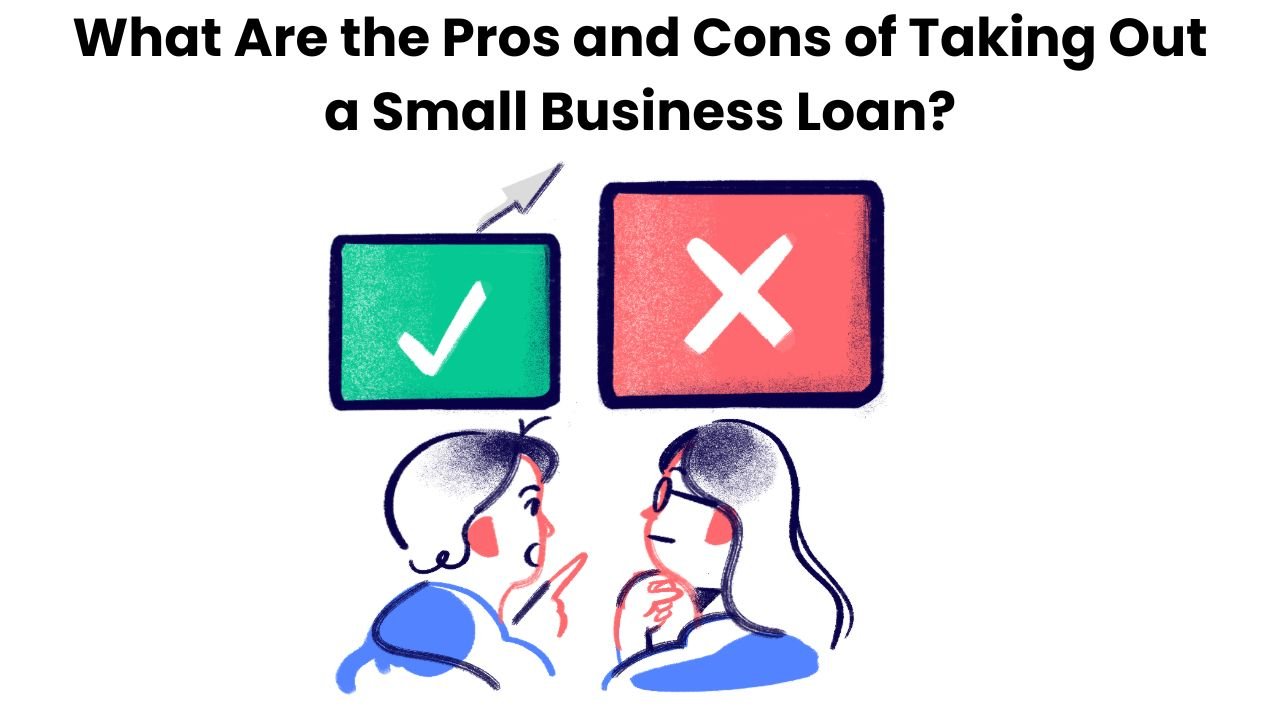
What are the advantages of small business loans?
Here are the advantages of small business loans:
- Access to capital
It provides you with immediate access to funds, which you can use for multiple purposes such as expansion, investing in new opportunities, hiring additional staff, buying inventory, and funding working capital.
- Maintaining ownership
Unlike venture capitalists and angel investors, you do not have to bear the risk of losing ownership. You will have full control over your business and profits.
- No risk of losing assets
Most of the business loans do not require additional security. Even if you finance equipment, you do not need additional collateral, which means your business assets will remain absolutely safe.
- Flexible terms
Many lenders offer small business loans on flexible terms. The repayment term will be decided based on your repayment potential.
- Competitive interest rates
Small business loans are offered at competitive interest rates. Banks follow strict norms. If your credit score is subpar, you will most likely be refused, but direct lenders accept applications from subprime borrowers as well.
What are the conditions to bear in mind while getting small business loans?
Although business loans offer some advantages, you need to bear in mind that they are certain to have drawbacks as well.
- Debt burden
Taking on a business loan increases the burden of debt. If your business struggles to generate profits, you will most likely fall behind on payments. Once you fall behind on payments, the debt will start to accumulate, and you will lose your business credit score too.
- Not easy to qualify
Even if direct lenders offer competitive interest rates and are more flexible than banks, it does not rule out the fact that they follow strict approval criteria too. You will need a threshold income, trading length, and a business plan (if you are a start-up).
In addition, direct lenders will check your business and personal credit scores. Only if your overall financial condition seems favourable will they sign off on your application.
- Impact on cash flow
The impact on cash flow will be great if you take out a small business loan. A large sum of your profits will go towards your debt settlement. Your business might struggle to meet its day-to-day business operations.
The bottom line
Getting small business loans can be daunting. Since there are various types of business loans, it often becomes quite hard to choose the right option. If you are oscillating between choosing the right loan option for you, contact small business loan brokers. They will identify your business needs and suggest the right business option.
FAQs
- Can a small business loan affect personal credit scores?
Yes, whether or not you are giving a personal guarantee, your personal credit score will be assessed by a lender. You need to have an up-to-date personal credit rating.
- Do lenders restrict the usage of a loan?
Small business loans can be used for a wide range of purposes, but some of them are restricted to a particular purpose. For instance, loans for buying equipment cannot be used for any reason other than buying equipment.
- Am I eligible for a loan if my business is seasonal?
Yes, you are absolutely eligible. However, you may not be able to borrow a large amount of money due to restricted cash flow during the off-season.
- What are the additional costs beyond interest rates?
Other costs include processing fees, which are one-off, early repayment charges, and late payment charges.
- Can loans affect my ability to raise money from investors in the future?
It depends on how an investor perceives your business. Most investors are not bothered by businesses with minimal debt. Try demonstrating a responsible payment behaviour.
- Can I refinance a business loan?
Yes, you can, but there should be a reason for refinancing your business loan. For instance, the current plan does not align with your business conditions.
- Can I negotiate terms with a lender?
You can try, but there is no guarantee that a lender will address your request. If you try to take out a loan with a broker, they will introduce you to lenders whose criteria match your circumstances.

Harry Kane is a financial writer and author who has covered wide topics related to business loans and finance for the last decade. He has been working as the Chief Contributor in finding out deals on various business finance products covered by Thebusinessfunds, a reputed business loan broker firm in the UK. The primary work of Harry is to analyse the loan requirements of various businesses according to their circumstances and affordability. He directly communicates with the loan aspirants and guides them to get the right loan matching their needs. He has a vast experience in finance writing, working with many major business firms in the UK. At Thebusinessfunds, Harry also used to write well-researched blogs covering the financial problems of business loan aspirants and providing relevant solutions. He is a postgraduate with MSc. in Banking and Finance.