The long-term loans take between 5 and 25 years, but under various trade-offs. The lending market continues to change as the effects of the pandemic become further.
A large amount of money may be required to propel your small or mid-sized firm to growth, and failure to choose the right one may be more devastating.
Some benefits seem to be much better than they are, and there are snags that you will run into years later. This guide cuts through the lighthouses to decide whether you would take out a long-term loan.
What Are Long-Term Business Loans?
Many get long-term business loans in the UK, as it offers financing solutions that span anywhere from 5 to 25 years. You’ll find these loans typically range from £50,000 to well over £10 million. This also depends on your business needs and qualifications.
Most banks and lenders provide both secured and unsecured versions. The secured loans require collateral but often come with better rates. You can choose between fixed interest rates that stay the same throughout or variable rates that might change with market conditions.
Businesses typically use these funds for major investments like:
- Building purchase or construction projects
- Major equipment with long useful lives
- Company-wide tech infrastructure upgrades
- Expansion into multiple new locations
- Funding significant R&D initiatives
The extended repayment structure means you’ll pay less each month compared to shorter loans. This makes big-ticket purchases more manageable for growing companies. This also needs to protect cash flow while still pursuing ambitious goals.
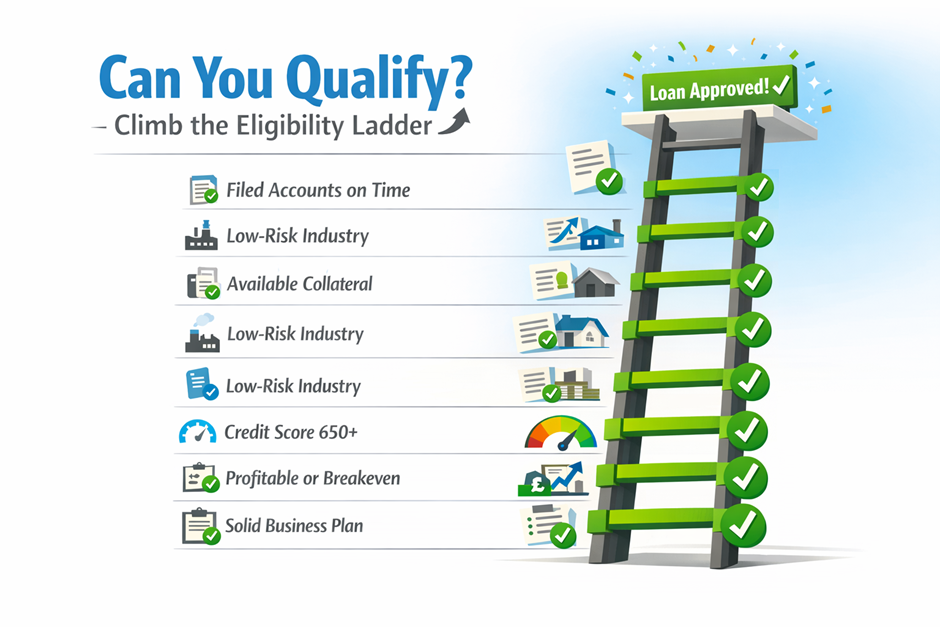
| Eligibility Criteria Checklist for UK Long-Term Loans | ||
| Requirement | Minimum Standard | Ideal Standard |
| Trading History | 2 years | 3+ years |
| Annual Revenue | £100,000+ | £500,000+ |
| Credit Score | 650+ | 720+ |
| Profitability | Breakeven | Consistent profit |
| Business Plan | Basic plan | Detailed 5-year plan |
| Collateral | Partial security | Full asset coverage |
| Industry Type | Low-medium risk | Stable sectors |
| Accounts | Filed on time | Audited accounts |
What are the Advantages of Long-Term Business Loans?
A major business project requires serious capital backing. The appropriate funding can mean the difference between merely surviving and strongly expanding your business. A finance broker for business loans often helps you secure better terms than going directly to lenders.
Ü Lower Monthly Repayments
The obvious advantage you will see first is probably a drop in your monthly instalment. Instead of repaying £100,000 in two years, you can do the same in ten years. Thus, you will be able to keep sufficient liquid funds for daily costs.
Your business can better handle seasonal downturns when payments remain manageable. Winter slumps won’t feel so threatening when your loan obligations stay reasonably sized.
Ü Access to Larger Loan Amounts
The lenders willingly lend more substantial sums when they have longer to recoup their investment. You can realistically secure £500,000+ when offering appropriate security. This level of funding puts serious property purchases within reach.
Major equipment investments become possible without depleting all your working capital. Your business can undertake genuine transformation projects rather than making incremental changes.
Ü Fixed Interest Rate Stability
You won’t lie awake worrying about tomorrow’s economic news affecting next month’s payment. Your budgeting becomes vastly more predictable when this major expense stays constant.
Any future rate hikes won’t touch your existing agreement. The Bank of England might raise rates repeatedly, but your loan costs remain unchanged. This lets you forecast expenses accurately for years ahead.
What are the Disadvantages of Long-Term Business Loans?
You should carefully consider the drawbacks before signing. Many business faces different circumstances that affect which loan structure makes sense.
Ü Higher Total Interest Paid
The convenience of smaller monthly payments comes with a significant price tag. Your 10-year loan might ultimately cost 40-60% more than the equivalent 3-year option. This extra expense adds up to tens or even hundreds of thousands of pounds.
You must calculate the lifetime cost before proceeding. Many business owners focus solely on monthly affordability rather than total expense. You also compare the APR to understand what you’re really paying.
Ü Collateral Requirements
The vast majority of significant long-term solutions involve asset pledging. Security may be in the form of your equipment, property, or even intellectual property. It poses a real danger in case of any changes in the market conditions or a decrease in revenues.
Business collateral is often augmented with personal guarantees. Your company could be indirectly supported by your house in case things go awry. These personal assets of the directors are, in some cases, involved in the business, even with the efforts to separate the two.
Ü Strict Eligibility Hurdles
The lenders require firm evidence that you will make it through the entire life of the loan. Two years of trading history with unaborted financial records are required.
The credit score is important when it comes to getting approvals. Your realistic business plans should reflect the realistic growth trends. The financial entity examines your business. They are also able to refuse applications made to sectors that are deemed risky.
Can Long-Term Loans Help Business Growth?
You can expand to multiple locations simultaneously rather than growing one slow step at a time. The right financing turns ambitious plans into actionable projects.
You can hire talented staff even with your current cash flow. You can bring on special experts who directly increase your revenue potential. Your technology upgrades that boost productivity suddenly make financial sense.
Your marketing reach expands dramatically with proper funding. You compete more effectively against larger players who previously dominated your market. You can consider these growth-focused applications:
- Developing proprietary systems that create lasting competitive advantages
- Building special facilities that lower production costs
- Creating a buffer inventory that prevents stockouts during demand spikes
- Investing in staff training programs that boost quality and efficiency
- Launching new product lines that diversify revenue streams
This long-term financing shifts your thinking from survival to genuine strategic planning. You take steps for maximum business results rather than short-term money considerations.
What Happens If Your Business Needs to Change?
The downside of extended commitments appears when your situation evolves. You’re locked into your agreement for many years, regardless of changing market conditions. Early exit typically triggers penalties ranging from 1-5% of the outstanding balance.
You can also adjust terms mid-loan, which proves difficult and often expensive. The refinancing brings its own costs, including arrangement fees and possibly higher rates.
Consider these potential complications:
- New opportunities might arise requiring different financial structures
- Market shifts could make your original business model less viable
- Technological changes might render funded equipment obsolete
- Regulatory updates could impact your industry economics
- Competitive pressures might force unexpected strategic shifts
You sacrifice flexibility for stability with long-term arrangements. You should enter such agreements with eyes open to potential future constraints.
The right long-term loan can transform your business when chosen carefully. You can match the term to the asset’s useful life, maintain some financial flexibility, and calculate total costs before signing.
Conclusion
You are now in a position to understand the important aspects that would make long-term business loans either ideal or challenging to suit your purposes. The appropriate option would be based on your growth schedule, risk tolerance, and cash flow trends.
You are free to discuss anything with your accountant. Most companies do well with these loans, and some complain of the extended term. It is possible to think of using smaller sums, should this be your first big financing step. The most preferred loan is that which will make your business develop without finding yourself at night stressing over payments.

Harry Kane is a financial writer and author who has covered wide topics related to business loans and finance for the last decade. He has been working as the Chief Contributor in finding out deals on various business finance products covered by Thebusinessfunds, a reputed business loan broker firm in the UK. The primary work of Harry is to analyse the loan requirements of various businesses according to their circumstances and affordability. He directly communicates with the loan aspirants and guides them to get the right loan matching their needs. He has a vast experience in finance writing, working with many major business firms in the UK. At Thebusinessfunds, Harry also used to write well-researched blogs covering the financial problems of business loan aspirants and providing relevant solutions. He is a postgraduate with MSc. in Banking and Finance.