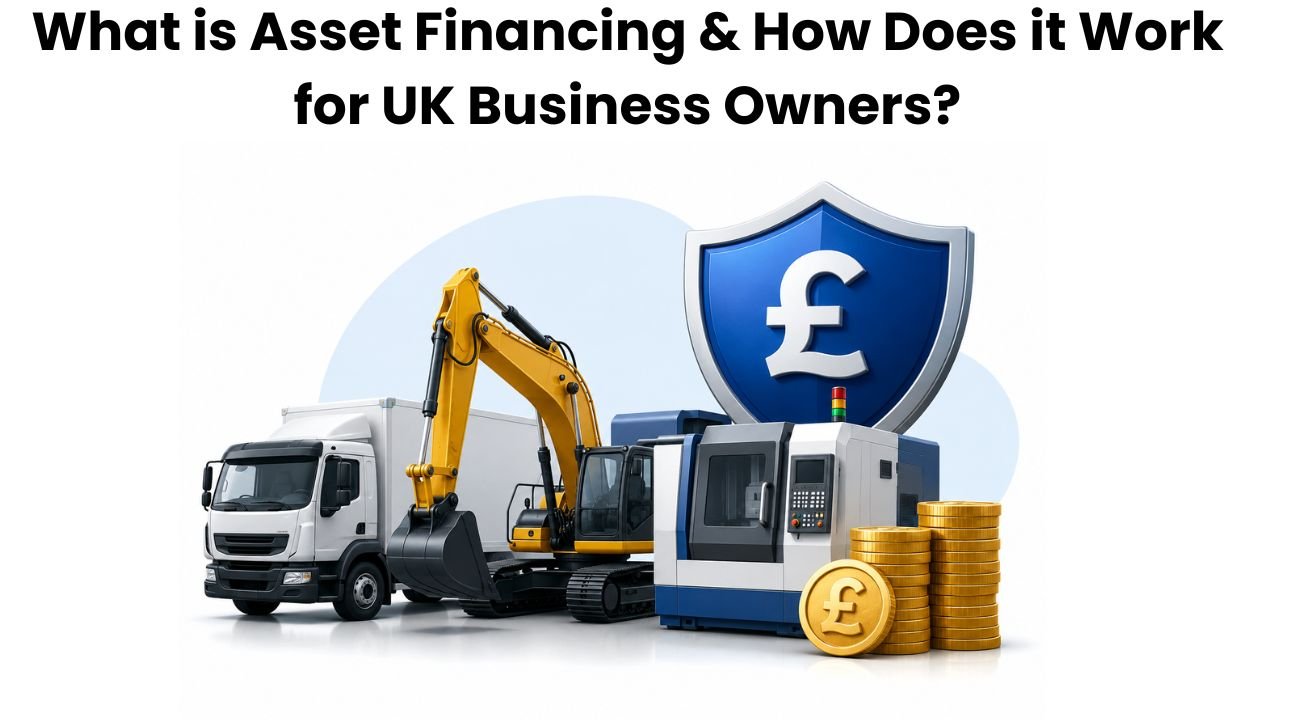
Asset financing in the UK allows business owners to acquire equipment, vehicles, or technology by using business assets as collateral, making it easier to manage cash flow when paying the full cost upfront is not feasible. It spreads payments over an extended period.
What is asset finance?
Asset finance in the UK is a type of business funding that entrepreneurs use to access funds to purchase equipment, inventory and technology. This method is used when paying for them outright is not an option or could disrupt cash flow. Businesses spread the cost over time and make regular payments throughout the repayment term. Most of the time, the asset purchased serves the purpose of collateral.
How does business asset financing work for UK businesses?
- First off, you need to identify an asset you want to purchase.
- Choose an asset finance provider. Fill in the application form, providing details such as a trading history, business turnover, and supplier details.
- The provider will assess your affordability, credit profile and asset value.
- Once approved, money will be provided to the supplier directly, and you will pay it back in instalments over a period of months.
- Once the whole amount is paid off, you receive the title of the asset or return the asset.
What types of asset finance are available?
The following are the types of asset financing:
- Hire purchase
You will need to pay a deposit upfront to sign a hire purchase agreement. Every month, a fixed instalment will be paid. You will own the asset at the end of the term after the settlement of the full cost of the asset. This is ideal for funding vehicles and machinery.
- Finance lease
You rent the equipment under this agreement, so there is no clause for ownership. You can return it after the lease ends, or you can renew it. Rentals are tax-deductible.
- Operating lease
It is also similar to a finance lease as it involves rental payments every month, but it is ideal for short-life assets. This does not have a clause for upgrade and replacement, as in the case of a finance lease.
- Asset refinancing
This involves raising working capital using owned assets as collateral. The lender has the right to repossess your asset to recover their money in case you default.
Compare all these options. You are just one click away from checking your eligibility.
What can you finance with asset finance?
Asset financing in the UK can be used for a wide range of tangible and intangible assets that you need for business operations and growth. Some of the examples include:
- Company cars and vans
- Fleet vehicles or trucks and lorries
- Construction machinery such as cranes
- Agricultural vehicles such as trucks and harvesters
- Computers and laptops
- Software licenses
- Office furniture and fittings
- Retail equipment
Why do UK businesses use asset finance?
The following are the reasons why businesses choose asset financing:
- Cash flow protection – no need to make large upfront payments, which keeps your funds reserved for day-to-day business operations.
- Quick upgrade and access to new technology – you can acquire new assets and technology without waiting for a large amount of cash. It supports businesses when you need new assets for the short term.
- Flexibility – not all types of asset financing require ownership. It reduces the cost of owning technology that becomes outdated too frequently. Tailored repayment terms are available.
- Tax benefits – hire purchase agreements and lease payments are tax-deductible.
- Easier approval – accessibility is easier because the asset you purchase itself serves as collateral. It reduces the risk on the part of the asset finance provider.
Who can apply for asset finance?
Businesses that can apply for asset financing include:
- Start-ups
- Small and medium enterprises
- Large corporates
- Sole traders
- Established businesses
Eligibility criteria
- You should have a trading history of 1 to 2 years, depending on the asset finance provider’s policy.
- Some providers will require you to have at least £100,000 annual turnover.
- A good credit history will help you secure better interest rates.
What is the difference between asset finance and asset refinance?
| Features | Asset finance | Asset refinance |
| Purpose | Helps acquire new assets without paying upfront | Helps unlock cash tied up in assets |
| Process | Suppliers receive funds from the provider, and you pay them in instalments | Your owned assets will be used as collateral. |
| Ownership | You get ownership at the end of the contract. In case of a lease, ownership remains with the finance provider. | Ownership remains with the business, but the lender takes the charge until the full amount is paid back. |
| Best for | Growing businesses | Established businesses |
What is the difference between asset finance and business loans?
| Aspects | Asset financing | Business loans |
| Purpose | Used only for the purchase of tangible and intangible business assets | Used for funding all types of business expenses such as cash flow, expansion, payroll, etc. |
| Collateral | The asset itself serves as collateral | They may be secured or unsecured depending on the amount and overall business financial condition |
| Ownership | Ownership is retained at the end of the contract; however, lease agreements require returning assets | You get ownership as soon as you pay for the asset through the business loan. |
| Flexibility | Less flexible because you can purchase specific assets | Highly flexible because you can use a business loan for all types of expenses |
| Cost | Cheaper as compared to unsecured funding | Unsecured business loans are expensive |
How much does asset finance cost?
The APR of asset financing for SMEs typically ranges between 6% and 15%. However, businesses with a compromised credit history will end up with the APR up to 40%, depending on the policy of an asset finance provider. It is hard to determine the actual cost of asset financing because there are numerous factors that asset finance providers consider. Do not forget about the additional costs:
- Upfront deposit: 10% to 20% of the asset value
- Arrangement fees between 1% and 3% of loan amount
- Administration fees
Try applying with an asset finance broker. Since they might have a large panel of asset finance providers, they can help you choose the right deal that matches your business needs and expectations.
What are the benefits and risks of asset finance?
Benefits
- You can spread the cost of purchasing an asset, so cash flow is not disrupted.
- It helps you access all types of assets, whether tangible or intangible.
- It offers flexibility as repayment schedules are decided based on cash flow.
- Interest and rental payments are tax-deductible.
- Approval is easier than that of unsecured business loans.
Risks
- Not all types of asset financing will let you become the owner of the asset purchased.
- Interest rates will likely be higher if overall business conditions are not favourable.
- Missed payments can lead to credit score damage and repossession of the asset secured.
How to apply for asset finance
Follow the following steps:
- Identify which type of asset you need
- Choose the finance type: hire purchase or lease
- Find an asset financing provider
- Prepare business information and arrange documents
- Check affordability
- Submit an application
- Once approved, sign the agreement and start making payments
Need asset financing? Unlock growth with flexible solutions. Check your options now.
FAQs
- Is asset financing suitable for seasonal expenses?
Yes, in fact, many asset finance providers offer seasonal repayment plans, allowing higher payments during peak months and lower ones during slow periods.
- What happens if the asset purchase breaks down?
You will be responsible for maintenance if you sign a hire purchase agreement, and if you sign a lease agreement, maintenance will be included in the contract.
- How quickly can I get approval for asset financing?
Depending on the loan amount and the policy of an asset finance provider, approval is made within 24 to 48 hours.
- Is asset finance available for start-ups?
Yes, most lenders will find it easier to approve asset finance for start-ups than unsecured business loans, but you should have some trading history. Some providers may approve funds with no trading history, but they will most likely require a personal guarantee and a larger deposit.
- Can I upgrade assets during the agreement?
Yes, you can. Most agreements will allow you to do that.

Harry Kane is a financial writer and author who has covered wide topics related to business loans and finance for the last decade. He has been working as the Chief Contributor in finding out deals on various business finance products covered by Thebusinessfunds, a reputed business loan broker firm in the UK. The primary work of Harry is to analyse the loan requirements of various businesses according to their circumstances and affordability. He directly communicates with the loan aspirants and guides them to get the right loan matching their needs. He has a vast experience in finance writing, working with many major business firms in the UK. At Thebusinessfunds, Harry also used to write well-researched blogs covering the financial problems of business loan aspirants and providing relevant solutions. He is a postgraduate with MSc. in Banking and Finance.