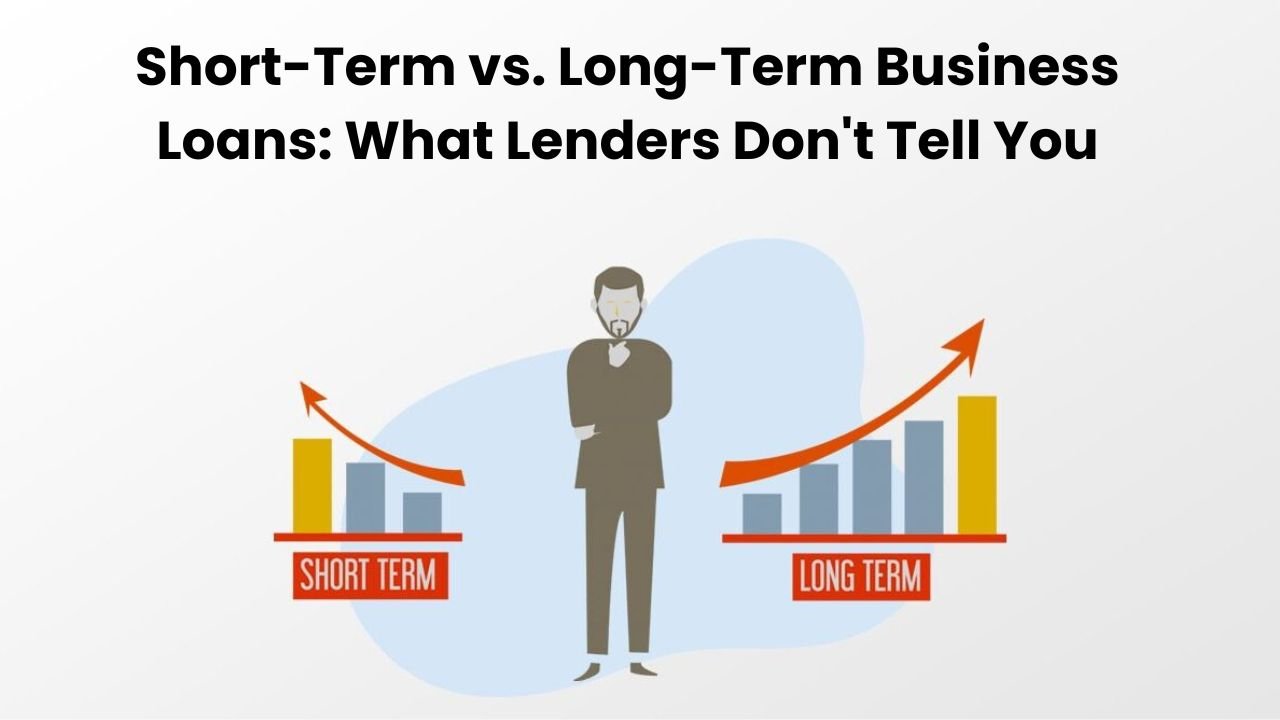
Short-term vs. long-term loans for business serve different purposes. The choice depends on the loan purpose, how quickly the investment pays, and how much the cash flow supports the needs.
Short-term loans have shorter repayment terms with high monthly instalments. However, you may get these loans within 24 hours. Alternatively, long-term business loans have low monthly repayments and require a longer financial commitment.
The blog states the aspects that loan companies don’t tell you about short and long-term business loans. It lists the hidden costs, lender tactics, and borrowing decisions every UK SME owner needs to understand before signing.
Re-defining the two loan types: What loan lenders actually mean
The definitions of short and long-term business loans are inconsistent throughout the market, as different loan companies use different terms.
In the UK, instant short-term business loans are loans which are typically offered for a period of 3-24 months to clear urgent and small requirements. Merchant cash advance, revenue-based finance, invoice finance and business overdrafts are some types. You may get £5,000- £250,000 on short-term business loans.
Alternatively, long-term business loans generally last for 2-25 years, depending on the loan purpose and the security offered. It is usually secured against an asset and hence may operate as secured business loans too. Bridging loans, business equipment finance, and asset finance are some of the major examples of loans. You may get £25,000 – £10m+ on long-term business loans.
What lenders don’t reveal – A 12-month loan from an alternative lender with monthly repayments may cost more in total than a 5-year loan from a high street bank for the same amount. However, with a lender comes better loan flexibility, more options and opportunities for bad credit businesses, which is otherwise challenging to encounter with street banks.
APR Vs Flat Rate Vs Factor Rate: What is the true cost of a loan?
You must have read about APR, interest rates, total costs of a loan, etc. However, only a few individuals know about Flat and Factor rates that direct lenders charge on a loan. It thus makes the whole agreement confusing at times. Here is what terms like APR, Flat rate and Factor rate mean:
- APR
An APR, or Annual Percentage Rate, is the total cost of a loan for a period of a year. It includes interest rates plus all mandatory fees that you pay to get a loan. You may find it easily with the regularized loan companies. However, it is not always explicit. It may thus impact the capability to analyze how much the loan actually costs. APR for long-term loans are cheaper than short-term loans. However, it may increase if you extend the loan term or miss payments.
- Flat Rate
A flat rate charges interest on the original amount for the entire duration of a loan. For example, if you borrow £50,000 at a flat rate of 10% for over 2 years, you pay £10,000 in interest in total. The true APR is equivalent to 18-19% only; the rest is a flat rate. Basically, a flat rate is calculated on the starting amount of the loan, whereas APR is calculated on the outstanding loan balance as you clear the dues.
- Factor Rate
A Factor Rate is quoted as a multiplier like 1.25, 1.45, or 1.35. For example, if you borrow £25000 at a factor rate of 1.35, you pay £27000 in total with a £7000 cost. A factor rate is usually a common phenomenon while getting a Merchant Cash Advance. It thus increases the APR from 60%-200%.
According to the Financial Consumer Panel, “The lack of mandatory APR requirement for business loans in the UK presents the most significant gap in ensuring a borrower’s protection. It is because one may struggle to compare total loan costs without APR.”
What lenders don’t reveal: Most loan companies don’t provide clear factors and flat-rate charges explicitly. It is therefore your duty to read the document carefully to understand the loan cost breakdown.
Hidden fees in small print: What should you look for?
How many of you check the terms mentioned below the main loan agreement? Only a few. It is important to check it, as most loan providers charge fees beyond interest and basic loan charges. Here is what you must check before consenting to the loan application:
- Loan arrangement/Origination fees
Most UK business lenders charge an arrangement fee of between 1% and 6% of the total loan value. On a £200,000 loan, that is £2,000 to £6,000 — often deducted from the loan advance rather than paid upfront, meaning you borrow £200,000 but receive £194,000–£198,000.
- Broker charges
If you use a commercial finance broker to find a suitable direct lender for your needs, you may pay 1-2% of the loan amount as commission fees. Brokers usually get it directly from the private loan company.
- Renew and rollover fees
Most short-term loan providers charge renewal and rollover fees at the end of the loan term. A business that rollover a short term loan for 3 times in 18 months may pay separate arrangement fees.
What lenders don’t reveal: understanding these basic loan costs clearly is important to get a loan. However, never apply directly if exploring options. Instead, use a free business loan calculator in the UK to understand approximate costs. It does not impact your credit score.
Personal Guarantees: What are you actually signing for?
Most short and long-term business loans require a personal guarantee. This is especially true when the business lacks enough credit score or the potential to prove its repayment ability. A personal guarantee makes you liable to pay the dues from your individual assets if you default on a business loan.
However, most loan companies don’t make it explicit at the beginning of the loan agreement.
What facts do you need to know about personal guarantees?
- Personal Guarantees often survive the insolvency proceedings. A liquidated company does not release you from a personal guarantee
- Joint and several personal guarantees imply that one guarantor may be held liable for the entire debt. It is regardless of how much ownership they share.
- Some lenders include all-monies clauses in PGs, meaning the guarantee covers all present and future borrowing from that lender — not just the specific loan you signed for
- Personal guarantees may impact your individual finances, too.
FAQs
- How do loan lenders decide the loan term to offer a business?
Most UK loan lenders decide the loan term by analysing the amount requirements, monthly affordability, asset life (if involved), business trading history, cash flow and security available. A loan company offers the terms within which one can afford to repay the dues comfortably.
However, for secured loans, the terms are usually decided by the property’s lease and estimated life.
- Can a startup get a long-term business loan?
Yes, a startup may get a long-term business loan if it has more than 2 years of trading history, audited files and accounts. However, some loan companies may consider new businesses with 6 months of operating history for loan approval.
- How can I improve my chances of getting a business loan?
You can improve the chances of getting a business loan by updating your business plan, paying off the business and personal debts, ensuring updated accounts and cash statements, and providing a personal guarantee.
Bottom line
Thus, you may encounter a clear difference between the short-term and long-term business loans. Each of these requires detailed credit and financial assessments to qualify. You may need to provide a personal guarantee if you don’t match the criteria offered. Understand the costs associated with the loan. Don’t overlook charges like early repayment fees, rollovers, and Flat/Factor costs.

Harry Kane is a financial writer and author who has covered wide topics related to business loans and finance for the last decade. He has been working as the Chief Contributor in finding out deals on various business finance products covered by Thebusinessfunds, a reputed business loan broker firm in the UK. The primary work of Harry is to analyse the loan requirements of various businesses according to their circumstances and affordability. He directly communicates with the loan aspirants and guides them to get the right loan matching their needs. He has a vast experience in finance writing, working with many major business firms in the UK. At Thebusinessfunds, Harry also used to write well-researched blogs covering the financial problems of business loan aspirants and providing relevant solutions. He is a postgraduate with MSc. in Banking and Finance.