
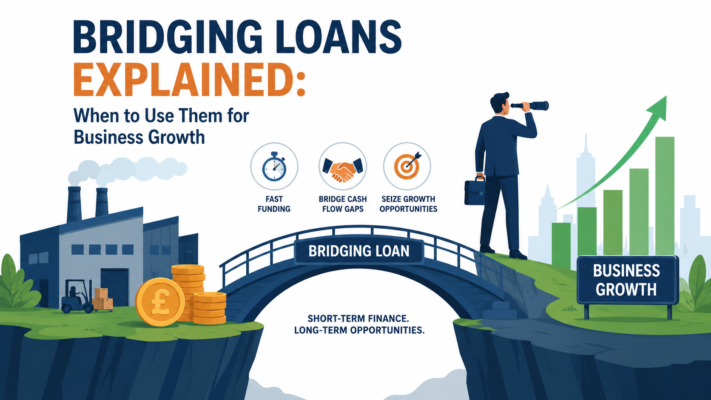
Bridging Loans Explained: When to Use Them for Business Growth
Bridging loans are short-term financial solutions designed to help bridge the gap in your finances until you manage to arrange larger capital.
What are bridging loans?
They are most commonly used when you are to buy a new property and your existing property is taking a lot of time to find a buyer. Until your existing property is sold, you can take out a bridging loan to fund the gap between purchasing a new property and selling an existing one. They are also used for commercial purposes.
How do bridging loans work?
These short-term loans are pledged against a property and offer only one year of repayment term. You will pay only interest every month. The principal amount is paid back at the end of the contract. If you cannot make the balloon payment, refinance it into a mortgage. At the time of approving a bridging loan, a lender will ask you to submit an exit strategy.
There are two types of bridging loans: open and closed. The form does not have any fixed repayment date despite the fact that the whole loan is to be settled within a year. Closed bridging loans have a fixed repayment date.
When to use bridging loans for business growth?
There are a couple of situations when you can use fast bridging loans for businesses in the UK:
- You want to purchase a new property before selling an existing one
These loans are best known for funding the gap between purchasing a new property and selling an existing one. Maybe you want to expand your business, for which you need to buy a new space. You cannot wait to arrange cash to buy a new property. Here comes the role of bridging loans.
You will access cash immediately that you can utilize to purchase a new space. It allows you to have enough cash to invest in a new space without waiting for the sale of your current property.
- You can access fast cash without missing out on a wonderful opportunity.
- You pay only interest throughout the term. You can either pay off the balloon payment at the end of the contract or refinance it into a standard mortgage. Flexible repayment options make them a better choice when you need funds for your business.
Bridging loans are a practical solution for those who do not want to lose their next property due to delays in selling their existing one.
- You are to buy a property at an auction
Bridging loans are also a popular choice for buying property at an auction. You are required to purchase an auctioned property within a small window of 28 days after the auction is over. It could be quite challenging for you to arrange funds within that short frame of time.
It is all but impossible to find a buyer for your existing property, and qualifying for a traditional mortgage is also a lengthy process. It takes several days. Bridging loans seem to be the best financing solution to meet the auction deadline.
- You want to renovate a property
A bridging loan is also used when you want to buy a derelict building to refurbish it. Bridging loans can provide you with sufficient funds to purchase a ramshackle that you want to reconstruct. Do not confuse these loans with property development finance. Bridging loans only help you provide funds to purchase a dilapidated building if your existing property is taking a longer time to find a buyer. The latter is used to fund a construction project.
- They can be useful to fix a business cash flow
Businesses often struggle with cash flow problems due to delays in payments from accounts receivables and unexpected expenses. Bridging loans can provide you with instant liquidity without disrupting your business operations.
- You can use bridging loans to pay your suppliers, staff and other day-to-day business expenses.
- Bridging loans can be used to fund expansion projects or to capitalize on business opportunities.
Since bridging loans are secured loans, it is recommended that you use them to fund expansion costs rather than day-to-day business expenses. Consider working capital loans for them.
Do bridging loans have drawbacks?
Though bridging loans provide you with quick funds, they are subject to some limitations as well.
- They charge very high interest rates as compared to traditional and online secured loans for small businesses. Added fees, including legal and administration fees, add to the cost.
- They are not long-term loans. You will need a refinancing strategy at the end of the term. Bridging loans cannot be approved without an exit strategy.
What are the alternatives to bridging loans?
If bridging loans do not sound suitable to your business needs, you can consider the following alternatives:
- Business loans – they can be used for a wide range of business purposes. They could be secured or unsecured depending on the loan amount and are available from banks and direct lenders.
- A line of credit – they are flexible loans that allow you to access a sum of money that you can use as and when you need. This is a revolving credit, and therefore you can reuse money that you have paid back.
- Invoice financing – this can be an effective solution to meet day-to-day business expenses when you are waiting for payments from your customers.
What are the best strategies to use bridging loans?
Since bridging loans are quite risky, you should exercise caution before taking them out:
- You should have a clear exit strategy
- Choose the timeline carefully. Delays in payments will cause unnecessary financial burden.
- Compare deals between lenders and banks. Contact a broker to help you with comparison.
- Consider alternatives if bridging loans are not meant to be an effective solution for you.
The final word
Bridging loans can be an effective tool for expansion and seizing business opportunities. However, they are short-term financing solutions, not long-term. You should have a plan for refinancing if you cannot make a balloon payment at the end of the term.
FAQs
- How quickly can a bridging loan be approved?
Approval timeline varies by lender. If all documents are ready, it takes only two to three days to get these loans approved.
- Are bridging loans suitable for recurring cash flow problems?
No, they have been designed to meet one-off costs where you need to fund the gap in cash.
- Are there any tax implications of using bridging loans?
Only interest payments are tax-deductible. You will need to consult a tax advisor for more information.

Lee Copper is an experienced financial content specialist helping businesses explore the UK loan market. He writes guides led by experts on business loans and finance products. His work follows strict editorial values to ensure reality, applicability, and simplicity for readers to make well-versed financial decisions. Lee creates in-depth guides backed up by research, industry best practices, and the latest market developments.


